
Check-ups and general dental care
From routine care to pain relief, and from a child’s first visit to dentures, most of what a family needs from a dentist is done here at Potong Pasir MRT. The aim of routine care is simple: find problems while they are small, treat only what needs treating, and help you keep your own teeth for life.
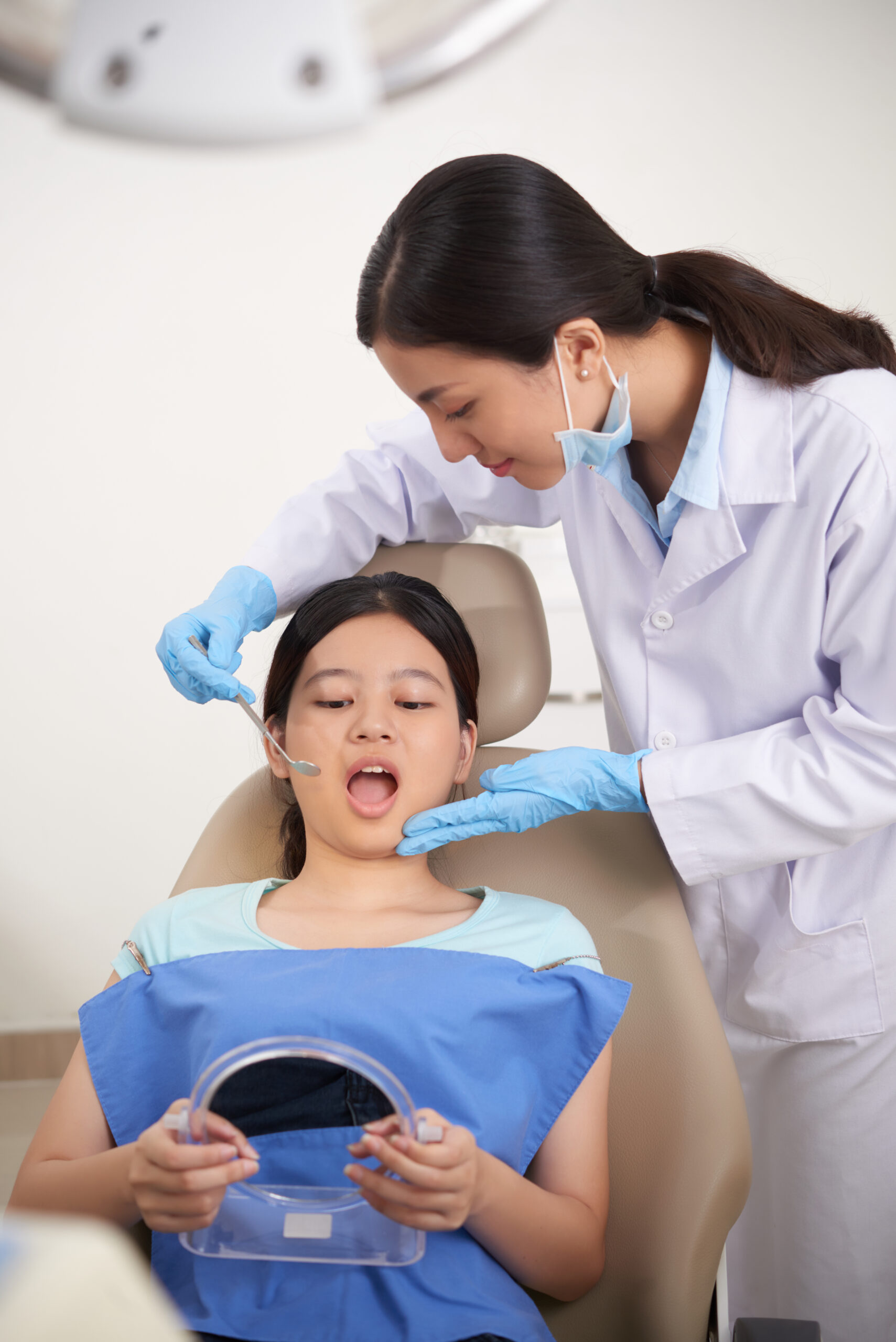
Your check-up
A check-up is a full examination of your teeth, gums, bite and the soft tissues of your mouth. We update your dental chart and take X-rays only when there is a reason to, for example to look between the teeth or under an old filling. You are shown what we find and told what it means. If treatment is needed, we explain the options, including the option of monitoring, together with the fee and any subsidy, and you decide.
Most check-ups are combined with scaling and polishing. Scaling removes tartar that brushing cannot reach; polishing removes surface stains and leaves the teeth smooth so plaque is slower to return. Fluoride is applied where it will help: routinely for children, and for adults with a dry mouth, braces, exposed roots or a history of decay.
For most people, a visit every 6 to 12 months is enough. If you have gum disease, many fillings or braces, we may suggest coming more often.
Gum care
Bleeding when you brush, swollen gums, bad breath that does not clear, or teeth that feel loose are signs of gum disease. Early gum disease (gingivitis) is reversed with thorough cleaning and good home care. Where the gums have pulled away from the teeth and pockets have formed (periodontitis), we clean below the gumline over one or more visits and then review you at shorter intervals. Gum disease is the most common reason adults lose teeth, and it rarely hurts until it is advanced, which is why it is checked at every visit.
Toothache and urgent problems
If you are in pain, have a swelling, have broken a tooth, or have lost a filling or crown, contact us early in the day and we will fit you in as soon as we can. The first visit is about finding the cause and relieving the pain. Depending on what we find, that may mean a filling, dressing the tooth, starting root canal treatment, or removing a tooth that cannot be saved. We tell you the options and fees before anything is done.
Repairing teeth
A tooth damaged by decay or a small fracture is usually repaired with a tooth-coloured filling in one visit. When too much of the tooth is missing for a filling to hold, or after root canal treatment, a crown covers and protects the remaining tooth. A tooth that cannot be repaired is removed under local anaesthetic; wisdom teeth and other impacted teeth are covered on the wisdom tooth page.
Replacing missing teeth
Missing teeth make chewing harder, let neighbouring teeth drift, and can change how the face looks. There are three ways to replace them, and we go through which suits you:
- Dentures: removable, replacing a few teeth or all of them. Suitable at any age, and the usual starting point when several teeth are missing or budget is a concern. Dentures are adjusted after fitting and relined as the gums change.
- Bridges: fixed, using the teeth either side of the gap for support.
- Dental implants: fixed, standing on their own without touching neighbouring teeth.
Children
We see children from the time their first teeth appear. Early visits are short and relaxed: a look at the teeth, a check on how the jaws and bite are developing, fluoride, and advice on brushing and diet. Fissure sealants protect the grooves of new adult molars. Around age 7 to 10 we check whether early orthodontic assessment is worthwhile; see braces and clear aligners.
Grinding, sports and sensitivity
If you wake with a sore jaw or your teeth are wearing flat, a night guard protects them from grinding. Custom mouthguards protect teeth during contact sports. Sensitivity to cold or sweet foods is common and usually has a simple cause, such as exposed root surfaces or a leaking filling, which we can identify and treat.
Fees and subsidies
Fees for check-ups, cleaning, fillings, extractions, crowns and dentures depend on your condition and the materials used, so they are quoted at your consultation before treatment starts. CHAS, Merdeka Generation and Pioneer Generation subsidies apply to most routine treatment and are deducted at the counter; subsidy amounts are on our CHAS page. Patients aged 60 and above can also use Flexi-MediSave for root canal treatment and permanent crowns.
Frequently asked questions
How often should I see the dentist?
What happens at a dental check-up?
Does scaling hurt?
I have a toothache. Can I be seen today?
Is a filling or a crown better for a broken tooth?
Do you see children?
How much will my visit cost?
Questions about your teeth?
Book a check-up. You will hear what we find, the options and the fee before anything is done.